Sunday, May 24, 2015

How to tell if your newborn is getting enough milk: How often should I feed my newborn baby?

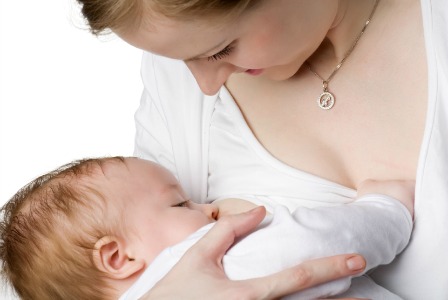
Let your baby be your guide, and feed him as often as he wants to feed. There's no need to set up a breastfeeding routine during the first few days and weeks.

On the first day, your baby will probably feed at least three to four times. After the first sleepy day or two have passed, your baby may seem hungry most of the time. And he probably is, since he'll digest a feed within a couple of hours.

At this point, your baby will probably want to breastfeed at least eight times a day. Though he could feed a lot more than that, such as every hour or so . By the end of the first week, his feeds will probably have settled down to six to eight a day.

There's no maximum number of feeds a day when you're demand-feeding in the early days and weeks. The more your baby feeds, the more milk your breasts will be stimulated to produce .

It's normal for newborn babies to want to feed very frequently. If you meet your baby's demands by offering your breast, you'll produce more milk. Topping-up with formula during the first six weeks can reduce your milk supply, as your body won't get the signals from your baby feeding to make more milk.

Source from: http://www.babycentre.co.uk/a617/how-to-tell-if-your-newborn-is-getting-enough-milk#ixzz3b4JC8MFt


Wednesday, May 20, 2015

Breastfeeding for beginners: Can I breastfeed after I go back to work?

If you're going back to work, it doesn't mean you have to stop breastfeeding. If your workplace has a nursery, you may be able to visit your baby during the working day, and breastfeed her as usual.

If you can't visit your baby during the day, you may want to express milk. Or you may choose to breastfeed only when you are with your baby, and give her formula milk during the day (mixed feeding).

Let your employer know in writing if you want to breastfeed after you return to work, so a risk assessment can be carried out. This is to make sure that your workplace is safe for a breastfeeding mum.

It's good news for employers, too. Mums who are supported to carry on breastfeeding after they return to work take less time off. And some research suggests that exclusively breastfed babies are less likely to be ill than babies who are formula-fed.

Source from: http://www.babycentre.co.uk/a613/breastfeeding-for-beginners#ixzz3ah4joywX


Monday, May 18, 2015

Breastfeeding for beginners: What should I buy for breastfeeding?

Buy at least two or three comfortable breastfeeding or nursing bras so your breasts are properly supported. These have hooks or zips that you can easily undo when your baby needs to feed.

Make sure that your bras fit properly, and that any flaps open completely. If only a small part of your breast is exposed, the bra may press on breast tissue and lead to blocked ducts or mastitis.

You may prefer to wait to buy bras until after your baby is born, to make sure that they will fit you perfectly. But bear in mind that getting out of the house with a newborn isn't easy, so think about going in late pregnancy. Many department stores have staff who are trained to fit nursing bras after 36 weeks of pregnancy.

You may find that your breasts have a tendency to leak, as even another baby's cry or the sight of a baby can stimulate milk flow. Keep a supply of washable or disposable breast pads handy, and consider buying a light-weight nursing bra for night-time, so you can wear breast pads while you sleep. If you're planning to express your breastmilk, you may want to consider buying a breast pump.

Source from: http://www.babycentre.co.uk/a613/breastfeeding-for-beginners#ixzz3aZ30LKuX


Breastfeeding for beginners: How do I start breastfeeding?

How can I prepare for breastfeeding?

Staying healthy is as much as you can do to prepare your body for breastfeeding. But learning as much as you can about breastfeeding before your baby is born will help you when the time comes.

Read how to prepare for breastfeeding, and encourage your partner to learn about it too, so he's ready to support you.

How do I start breastfeeding?

Feeds can take anything from five minutes to 40 minutes, so find a comfortable place before you start. In the early days of breastfeeding, when you're still trying to get the hang of it, creating the right atmosphere is important.
If you're easily distracted by noise, find somewhere quiet. If you tend to get bored, you may want to feed with the radio or television on, but only if breastfeeding is going well. Try different spots until you find what works for you.
Hold your baby in a position that won't make your arms and back ache. Have cushions or pillows nearby to support you or your baby. Laid-back breastfeeding involves lying on your back, so that your baby can rest on your body, while your hands are free to support her. Or try the cradle hold, which means cradling your baby across your chest, raised up on a cushion or pillow. It depends on what's most comfortable for you.
Get yourself and your baby in a relaxed position before you start feeding. Pay attention to how your breasts feel when your baby latches on. She should take in a big mouthful of breast tissue.
If you have large breasts, you may find it more comfortable to lie on your side while feeding, or you may want to try holding your baby under your arm in a rugby ball position.
If latching on hurts, break the suction by gently inserting your little finger between your baby's gums and your nipple, and try again. Once your baby latches on properly, she'll be able to do the rest.

Source from: http://www.babycentre.co.uk/a613/breastfeeding-for-beginners#ixzz3aVMvMREW


Sunday, May 17, 2015

Breastfeeding for beginners: How long will I be breastfeeding for?

The Department of Health recommends that your baby has only breastmilk for the first six months of her life. It also recommends that you carry on breastfeeding after your baby has started on solid foods, until the end of her first year and beyond, if you'd like to.

Continuing to breastfeed while introducing solid foods to your baby may benefit her immune system. She may also be less likely to develop health conditions such as coeliac disease and type 1 diabetes.

Most mums aim to breastfeed for between three months and 12 months, and some choose to breastfeed beyond the first year (extended breastfeeding). A lot depends on your individual circumstances and how you feel about it.

Source from: http://www.babycentre.co.uk/a613/breastfeeding-for-beginners#ixzz3aPPes0Iz


Saturday, May 16, 2015

Breastfeeding for beginners: Is it true that breast milk is the best?

If you've just started breastfeeding, you're doing the right thing for you and your baby.

But if breastfeeding doesn't come naturally at first, don't worry. Plenty of new mums and babies have to practise and persevere until they get the hang of it.

Is it true that breast is best?

Yes, breastmilk is the best food for your baby. It's the healthiest way to feed her.

Breastmilk is a complete food. It contains at least 400 nutrients, as well as hormones and disease-fighting compounds, that aren't present in formula milk. Its nutritional makeup even adjusts to your baby's needs as she grows.

Feeding your baby only breastmilk for up to six months (exclusive breastfeeding) is particularly good for her. It can improve your baby’s cognitive development. So being breastfed could even make her more intelligent.

Babies who are exclusively breastfed from birth are also much less likely to be ill in their first year of life. Being breastfed may help your baby to fend off illnesses such as:
We can't say that exclusive breastfeeding reduces the risk of children ever developing eczema. But babies who are breastfed for any period of time do tend to have lower rates of severe eczema than babies who were always formula-fed. It's also possible that breastfeeding delays when your child first develops eczema.

Breastfeeding helps to build a special bond between you and your baby. And in the long-term, breastfeeding may help your baby to stay healthy. Studies have shown that adults who were breastfed as babies, when compared with those who were formula-fed:
  • had lower blood pressure
  • had lower cholesterol levels
  • were less likely to become obese
  • were less likely to develop type 2 diabetes
Breastfeeding is good for you, too, and may help you to lose weight. In the long term, it also helps to:
  • lower your risk of breast cancer
  • protect against ovarian cancer before the menopause
  • reduce your risk of developing type 2 diabetes
Source from: http://www.babycentre.co.uk/a613/breastfeeding-for-beginners#ixzz3aJLR5D43


PRE-ORDER: Philips Avent Complete Natural Starter Set

The Philips AVENT Complete Natural Starter Set includes everything you need when breastfeeding your baby. Included in the set is a steam steriliser, a manual breastpump and some Philips Avent natural bottles to feed your expressed breastmilk to your little one.

The Philips AVENT 3-in-1 Steriliser is quick and easy to use to sterilise your baby's feeding equipment and accessories, and the adjustable size saves space in the kitchen. The baskets in this Philips AVENT steriliser are perfect for both wide and narrow neck bottles, and sterilising is very fast, taking just six minutes to complete the cycle - and as a safety precaution the 3 in 1 Philips AVENT steriliser automatically switches itself off when finished.

The Philips AVENT natural manual breast pump offers a more comfortable expressing position for easier milk flow. The soft massage cushion has a warm feel for gentle stimulation, and it's compact design makes it easy to take out and about which makes it great when travelling or for mums returning to work. In addition to this, the intuitive assembly and minimal parts make cleaning easy too. You can use the Philips AVENT natural manual breast pump with other feeding products in the range including natural and classic bottles and milk storage containers.

The Philips AVENT Complete Natural Starter set also comes complete with a set of Philips AVENT natural bottles allowing you to express your milk and store it ready to bottle feed later. The Philip AVENT natural bottles feature an innovative teat with a petal design to encourage natural latch on similar to the breast. The wide breast shaped teat promotes natural latch on similar to the breast and makes it easier for your baby to combine breast and bottle feeding. The petals inside the teat increase softness and flexibility without teat collapse so your baby will enjoy a more comfortable and contented feed. The innovative twin valve design reduces colic and discomfort by venting air into the bottle and not baby's tummy and due to the unique shape, the bottle is easy to hold and grip in any direction for maximum comfort, even for baby's tiny hands.

To complete this exclusive set, it also includes a brush specifically designed for thorough cleaning of bottles & teats and an orthodontic soother.

What's in the box:
  • Philips AVENT SCF284/01 3-in-1 Electric Steam Steriliser
  • Philips AVENT SCF330/20 Comfort Manual breast pump (includes 1x125 ml bottle)
  • Philips AVENT SCD290/00 Newborn Starter Set (which includes 2 x 125 ml bottles, 2 x 260 ml bottles, 1 x 0-6m soother, 1 x bottle and teat brush)
  • Philips AVENT SCF693/27 Natural Feeding bottles 260 ml 2 pack
  • Philips AVENT SCF653/27 Teats 2 pack
  • Philips AVENT SCF176/18 Night-Time Soothers 2 pack
Selling Price: TBC